SEC F / SPECIALIST FINISHES
Bamboo structures and pavilions in Bali
Bamboo is a genuine structural material with a maintenance contract attached. Treated properly and kept under a generous roof overhang, a bamboo pavilion in Bali gives 15–25 years; untreated and rain-exposed, powderpost beetle can hollow the poles in three. We approach it as contractors rather than sculptors — species and grade selected, poles treated and documented, connections engineered, roof detailed to keep the structure dry. The romance survives the engineering perfectly well.
- Boron-treated poles with batch records
- Engineered connections, drawn and load-checked
- Roof overhangs sized to keep the frame dry
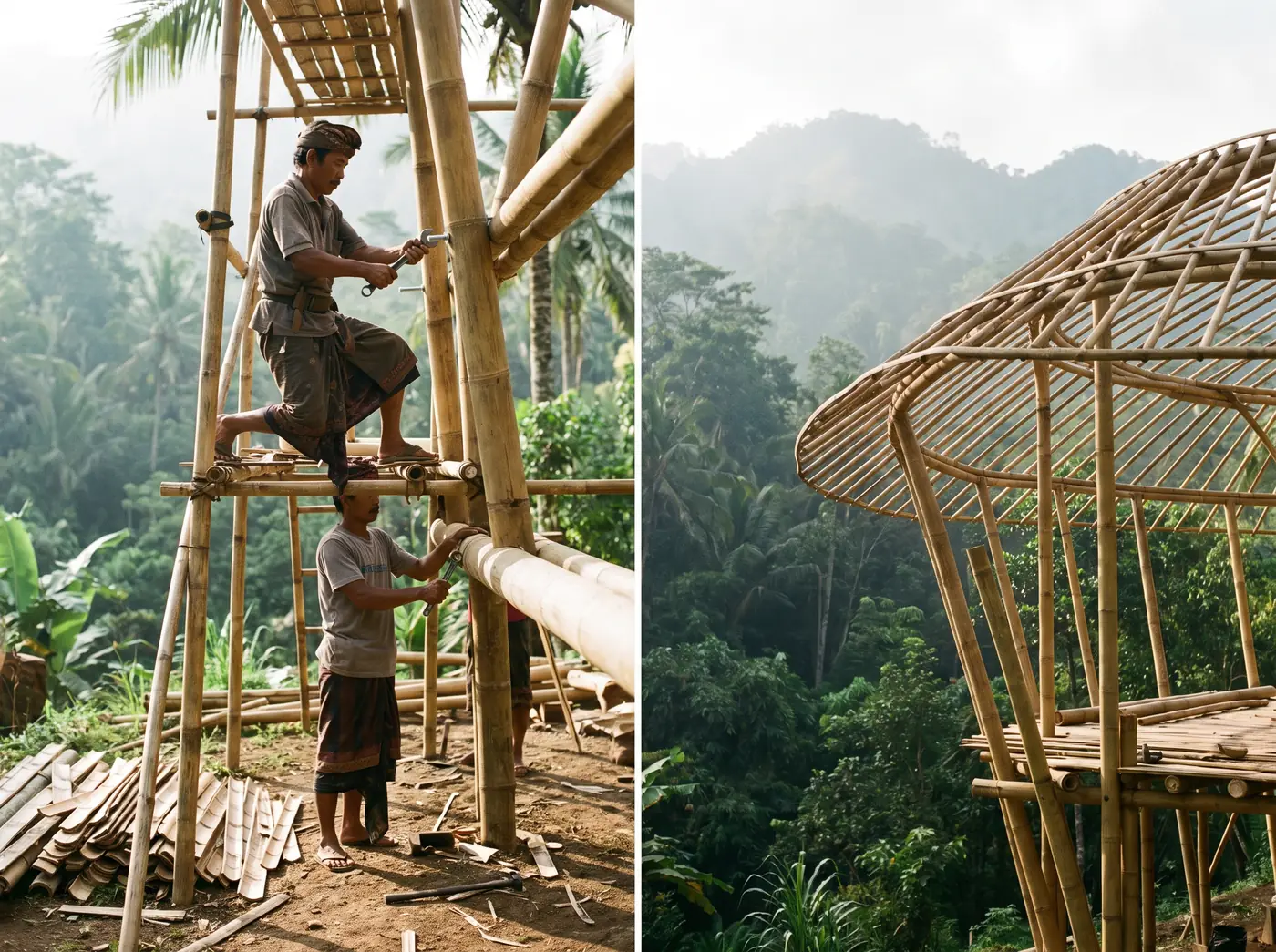
Everything starts with the material. Petung goes into columns and primary members, tali and black bamboo where slenderness suits, harvested at three to five years and never used green. Each pole is treated by boron soaking or the Boucherie method, which pushes solution through the entire culm, then controlled-dried to below 15 per cent moisture content. Poles arrive with treatment batch records, because a bamboo building is only as honest as the treatment nobody can see.
Connections are where bamboo buildings actually fail. We cut fish-mouth ends fitted tight to the receiving pole, run through-bolts into internodes filled with mortar so the bolt bears on solid material instead of crushing a hollow wall, and add steel plates or lashings where the geometry demands. Every node is a drawn detail checked for load and photographed before lashing hides it. Spans, roof loads and wind uplift get calculated exactly as they would for steel.
What decides whether bamboo lasts three years or twenty-five
Three variables, and none of them is luck. Treatment first: bamboo is starch-rich, and untreated poles are food for powderpost beetle and termites within a season or two. Boron chemistry removes the food value, but only if the solution reaches the whole culm — a brush coat on the outside protects nothing at all. Second, moisture content: poles built in above 15 per cent will split as they dry in place, and splits invite water and insects straight into the core.
Third, and most important, the roof. Bamboo that never gets wet lasts generations — the old structures still standing on this island survived because of deep overhangs and raised bases, not because of chemistry. So we design overhangs of a metre or more, keep every column base above splash height on stone or concrete, and detail the roof junctions so water leaves the building instead of running down a pole and sitting in a joint.
Building with bamboo as a contractor
Bamboo carries an artisan reputation, which is deserved and occasionally expensive. We treat it as construction: a structural drawing set with node details, a bill of poles by species and diameter, a treatment record for every batch, and a programme that says when the crew arrives and when you get the building. Loads are calculated, connections checked, and the finished frame inspected before any roof goes on.
That discipline matters for approval and insurance as much as for durability — a commercial pavilion, a yoga shala or a restaurant roof needs calculations somebody will sign. It also keeps costs predictable, because poles are ordered against a schedule rather than bought by eye. Where bamboo is the wrong answer — long clear spans, heavy point loads, permanently wet exposure — we say so and price a steel or timber alternative alongside it. Bamboo and structural timber share the same enemy here, and our field note on protecting structural timber from termites in Bali covers the treatments and details that keep both standing.
SCOPE OF WORK
What's included
Design & engineering
Spans, roof loads and wind uplift calculated, with node details drawn rather than improvised on site.
Pole selection & supply
Species, diameter and wall thickness specified per member, sourced mature and straight, rejected on delivery if not.
Treatment & drying
Boron soak or Boucherie treatment with batch records, then controlled drying to below 15 per cent moisture.
Frame construction
Columns set on raised stone or concrete pads, fish-mouth joints cut and fitted, through-bolts into filled internodes.
Roofing
Alang-alang, shingle or membrane laid over the bamboo frame, with overhangs sized to keep rain off the structure.
Maintenance handover
Inspection points, re-coating intervals and a schedule for exposed members, written down and photographed.
PROCESS
How the job runs
- 01
Concept & site visit
We look at the setting, the span you want and the exposure, then sketch what bamboo can honestly do there — free visit.
- 02
Engineering & fixed quote
Structural drawings, node details, pole schedule and a fixed itemised price covering treatment and roof.
- 03
Treat & fabricate
Poles selected, treated with batch records and dried, then cut and fitted — much of it prepared before site work starts.
- 04
Erect, roof & hand over
Frame erected on raised bases, roof installed, joints photographed and a maintenance schedule handed over.
INDICATIVE PRICING
Honest numbers, before the survey
| Scope | Guide price |
|---|---|
| Bamboo pavilion, built complete | from IDR 3,200,000 / m² |
| Treated structural bamboo supplied | from IDR 285,000 / pole |
| Design & structural engineering package | from IDR 25,000,000 |
Span, roof covering and access set the figure — fixed after a free site visit and concept sketch.
Request an exact quoteFAQ
Bamboo building in Bali — what clients ask
How long does a bamboo structure really last?
Fifteen to twenty-five years for a treated, well-roofed pavilion, with individual members replaceable along the way. The variables are treatment quality, moisture content at the time of building, and how much rain actually reaches the poles. Untreated bamboo left exposed can be structurally compromised in three years, which is where the mixed reputation comes from.
How do you treat the bamboo, and can we see proof?
Boron salts, applied either by soaking cut poles in tanks or by the Boucherie method, which pushes solution through the culm under pressure and reaches the inner wall. Poles then dry under cover to below 15 per cent moisture. Each batch gets a record — treatment date, solution strength, soak time — and those records come to you in the handover file.
Can a bamboo pavilion get approval and insurance?
Yes, when it is engineered rather than improvised. We produce a structural drawing set with node details and calculations for spans, roof loads and wind uplift, which is what an approval file and an insurer both want to see. That documentation is standard on our commercial pavilions and available on private ones.
What does a bamboo pavilion cost in Bali?
Complete pavilions start at IDR 3,200,000/m² including frame, roof and treatment. Treated structural poles supplied on their own are from IDR 285,000 each depending on species and diameter. Design and engineering for a bespoke structure is from IDR 25,000,000, credited into the build where we construct it. Span, roof type and site access set the final figure.
RELATED SERVICES
Often booked together
FROM THE BLOG