FIELD NOTES · 2026-10-01 · 8 min READ
Double glazing in Bali: when it pays and when it doesn't
In most Bali villas double glazing is not the best use of the money. The temperature difference between an air-conditioned room and the outside is small compared with a European winter, and most heat comes through the glass as sunlight — which a single pane of solar-control or low-E glass blocks almost as well. Double glazing earns its price in three cases: bedrooms air-conditioned around the clock, rooms under the airport approach or on a busy road, and large west-facing glass. The numbers follow.
Where the heat actually comes from
Heat moves through a window in two ways. The first is conduction: heat flowing through the glass because it is hotter outside than inside. Double glazing is excellent at reducing this. But in Bali the difference is small — around 32 °C outside on a hot afternoon against 24 °C in an air-conditioned room, a difference of about 8 degrees. Through ordinary single glass (U-value about 5.8) that is roughly 46 W per m²; through standard double glazing (U about 2.8) about 22 W per m². A saving, but a modest one.
The second is sunlight passing straight through the glass. A west-facing window in direct afternoon sun can let several hundred watts per m² into the room through clear glass — ten times the conduction figure. Double glazing with clear glass barely changes that. What changes it is shading (roof overhangs, louvres, trees) and glass with a low solar heat gain coefficient: solar-control or low-E coatings, which can cut the solar heat roughly in half without darkening the room.
So in the tropics the order of priorities is: shade the glass, choose solar-control glass where the sun reaches it, seal the gaps around frames — and only then consider insulated glass.
When double glazing is worth it
- Bedrooms air-conditioned around the clock. In a long-stay home or a rental where AC runs day and night, the conduction saving adds up over the year and the room holds its temperature better.
- Noise. Villas under the approach path to Ngurah Rai airport — parts of Jimbaran, Kedonganan and Tuban — or on busy roads in Canggu and Seminyak. An insulated unit with one laminated pane, or acoustic laminated glass on its own, makes a real difference to sleep. The frame and seals matter as much as the glass: sound comes through gaps.
- Large west-facing glass where you also want low-E: putting the coating inside an insulated unit gives the best overall performance.
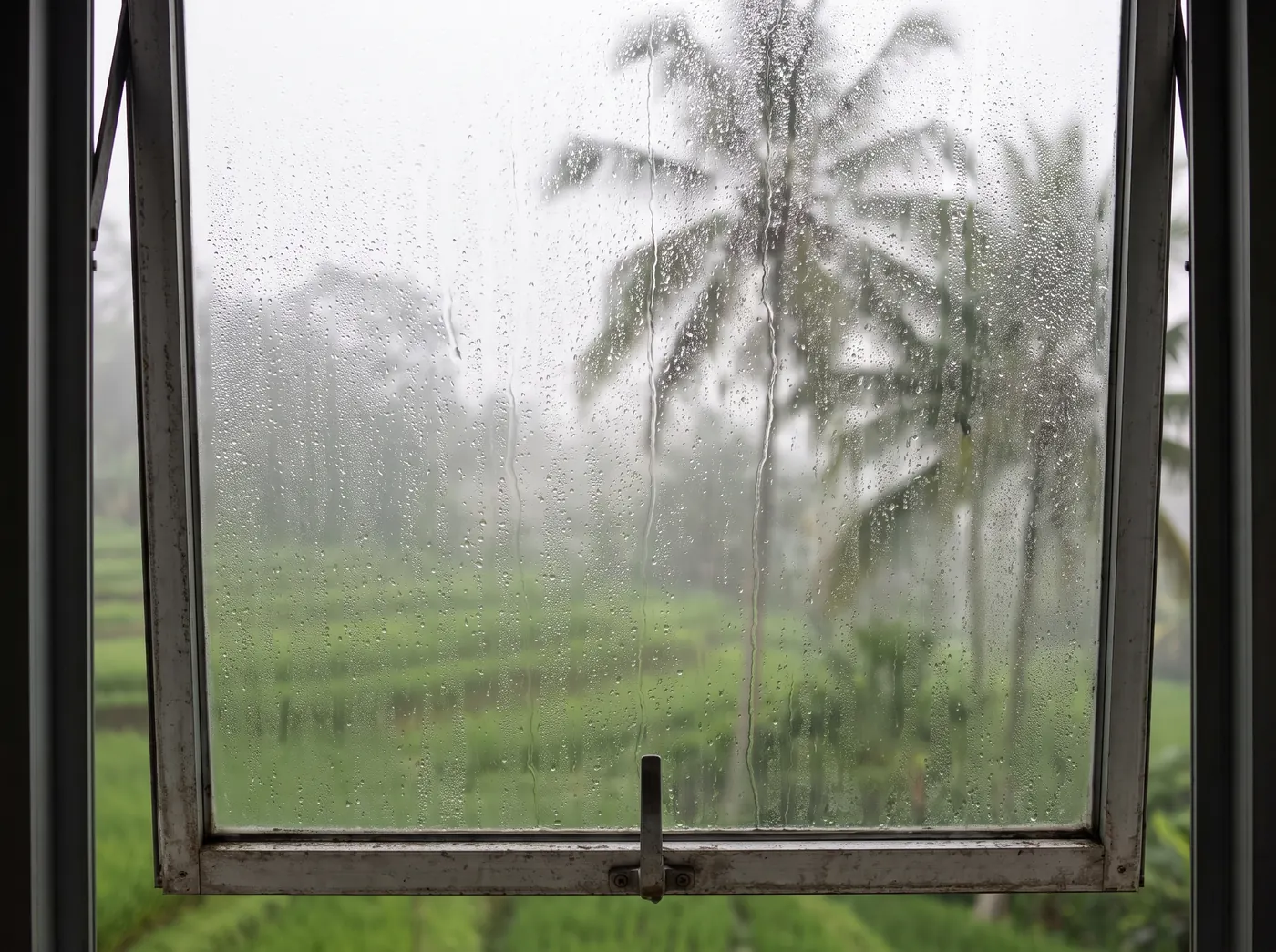
- Condensation on the outside of the glass. On humid mornings, single glass in a cold air-conditioned room fogs up on the outside — the glass is below the dew point of the outdoor air. An insulated unit keeps the outer pane closer to outdoor temperature and largely ends it.
Cheaper measures that often do more
- Shading. A deep roof overhang or external louvres stop sunlight before it reaches the glass — the most effective measure of all.
- Solar-control or low-E single glazing. Cuts solar heat through the glass at a fraction of the cost of insulated units.
- Acoustic laminated glass. For noise alone, often enough without a second pane.
- Sealing the frame. Air leaking round a poorly sealed frame can cost more cooling than the glass itself. New brushes and gaskets are cheap.
- Window film. A retrofit option for existing clear glass where replacing it is not practical.
What double glazing costs in Bali
An insulated glass unit — two panes, a spacer and a sealed, dry cavity — usually costs two to three times as much per m² as a single pane of the same glass, before any coating. The bigger cost is often the frame: an insulated unit is around 20–28 mm thick, and many standard local profiles cannot take it, so the window system has to be chosen for it from the start. Retrofitting double glazing into existing single-glazed aluminium frames usually means new sashes or new windows.
Make sure the units are made by a supplier who fills and seals them properly — in Bali's humidity a poorly sealed unit mists up between the panes within a few years, and then it has to be replaced.
What to ask a supplier before you buy
- What are the spacer and the edge seal? A good unit has a desiccant-filled spacer and a double seal round the edge. In Bali humidity a single cheap seal lets moisture in, and the unit mists up between the panes.
- Which pane is laminated or coated, and which way does the coating face? A low-E or solar-control coating works only on the correct surface of the unit.
- Will my frame take it? Ask for the glazing pocket depth of the profile and the maximum unit thickness it accepts.
- What is the warranty against misting? Seal failure is how insulated units usually die; the period should be in writing.
- How heavy is the leaf? Two panes weigh twice as much. Rollers, hinges and leaf size must be rated for it, or a heavy sliding door will be stiff within a year.
Noise: the frame matters as much as the glass
Sound gets in through the weakest point, and on most villa windows that is not the glass but the gaps: worn brushes on sliding sashes, a frame joint filled with foam instead of sealed, louvres and vents. Before paying for insulated units in a bedroom near the airport approach, it is worth checking how much of the noise comes round the glass rather than through it. A casement or tilt-and-turn window that closes onto compressed gaskets is much quieter than a sliding window with brush seals, whatever the glass. Where the glass is the weak point, a laminated pane with an acoustic interlayer — on its own or inside an insulated unit — reduces road and aircraft noise more than two plain panes of similar weight.
Our recommendation, room by room
| Room | Recommendation |
|---|---|
| Living room opening to a shaded terrace | Single tempered glass; shading does the work |
| West-facing living room or big glazed wall | Solar-control or low-E glass; insulated unit if AC runs most of the day |
| Bedroom with AC around the clock | Insulated unit with low-E |
| Bedroom near the flight path or a busy road | Acoustic laminated glass, or an insulated unit with a laminated pane |
| Bathroom, kitchen, service areas | Single glass; tempered where required for safety |
If you are building or replacing windows, we price both options side by side for the rooms where the choice is real — see our aluminium windows and facade glazing and aluminium doors. For a full comparison of window prices, read aluminium windows and doors in Bali: 2026 prices.
FAQ
Quick answers
Does double glazing keep a Bali villa cooler?
A little. It reduces heat conducted through the glass, but most heat comes in as direct sunlight, which clear double glazing barely reduces. Shading and solar-control or low-E glass keep rooms cooler for less money; double glazing helps most in rooms air-conditioned around the clock.
Does double glazing stop aircraft noise in Jimbaran?
It helps, especially with one laminated pane in the unit, but well-sealed frames matter as much as the glass. For many bedrooms acoustic laminated glass in a well-sealed frame gives most of the benefit at a lower cost.
Why do my windows fog up on the outside in the morning?
The glass of an air-conditioned room is colder than the dew point of the humid outdoor air, so moisture condenses on the outside. It is harmless and clears as the sun warms the glass; insulated glass or a slightly higher AC setting at night largely prevents it.
Can I add double glazing to my existing aluminium windows?
Usually not directly. Insulated units are 20–28 mm thick and most standard local frames are made for 5–8 mm glass, so it normally means new sashes or new windows. Solar-control film or acoustic laminated glass can often be fitted into existing frames instead.
NEED IT DONE?
We do this work
This guide is published by the engineers of a full-cycle construction company in Bali — the same crews that supply, install and repair the work described above.